 English
 Shqip
Shqip

AFSA Executive General Director Presents 2025 Results and Strategic Priorities for 2026 and ahead at the Parliamentary Committee on Economy, Employment and Finance
Statement by Ms. Adela Xhemali, Executive General Director of the Financial Supervisory Authority, during the presentation of the 2025 Annual Report to the Parliamentary Committee on Economy, Employment and Finance
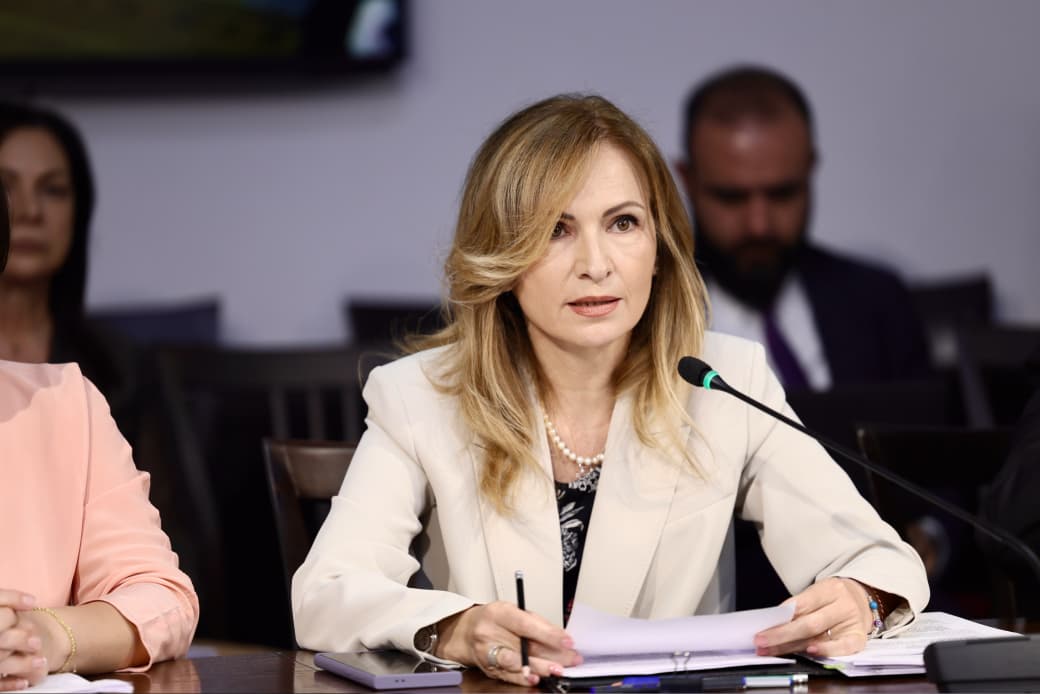 Madam Chair of the Committee,
Honourable Members of Parliament,
It is my pleasure to present the Financial Supervisory Authority’s report on its activities during 2025.
This report is more than a presentation of figures and statistics. It is an opportunity to assess the resilience of the non-bank financial markets, the level of protection afforded to citizens who use financial services in these markets, the credibility of our supervisory framework, and our progress toward the European standards that Albania seeks to achieve on its path toward European integration.
In essence, the conclusion of 2025 can be summarized through four key messages.
First, the financial markets under the Authority’s supervision continued to grow while remaining stable. At the end of 2025, the total value of assets in the supervised markets reached approximately ALL 149 billion, representing an annual increase of 13 percent. This is a clear indication that the non-bank financial sector is gradually assuming a more significant role within the country’s financial system.
Second, the Authority’s supervisory activity has become increasingly focused on risk-based supervision, transparency, and consumer protection. Our objective is not only to promote market growth, but also to ensure that such growth is sustainable, effectively supervised, and founded on the principles of transparency, stability, and trust.
Third, 2025 and the first months of 2026 marked significant progress in the implementation of the recommendations of the Assembly of Albania, particularly with regard to Solvency II, IFRS 17, risk factors in the calculation of Motor Third-Party Liability (MTPL) insurance premiums, digitalisation, capital market development, and the strengthening of public communication.
Fourth, our agenda for the period ahead is clear: further alignment with the European Union acquis, strengthening prudential supervision, enhancing digital resilience, improving consumer protection, and fostering the deeper development of non-bank financial markets.
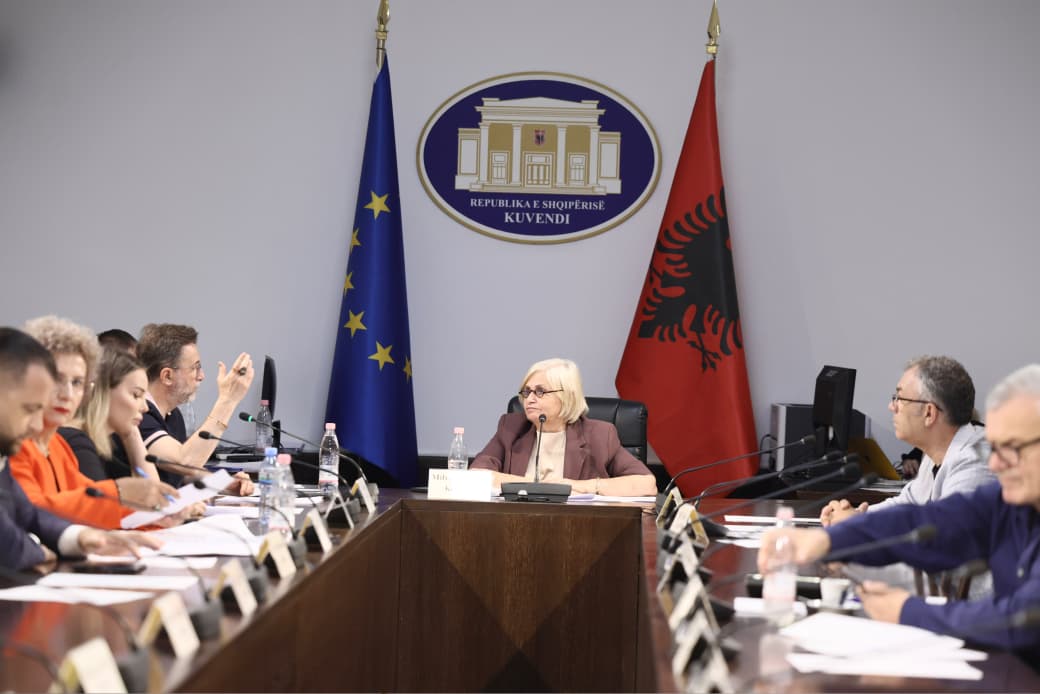
Honourable Members of Parliament,
Before turning to the key market indicators, I would like to emphasize that the recommendations issued by the Assembly have served as a direct point of reference for the Authority’s work throughout 2025 and continue to guide our activities in 2026.
One of the most important ongoing initiatives is the transition to the Solvency II regime, which represents a fundamental change in the way insurance undertakings are supervised. This regime transforms the supervisory methodology of the insurance market from a rule-based approach to a risk-based framework focused on risk assessment, capital adequacy, internal governance, and the actual capacity of insurance companies to withstand financial shocks, in line with European supervisory standards.
During 2025, the Financial Supervisory Authority continued implementing the seven-year transition plan toward Solvency II and successfully completed its first phase, the Quantitative Impact Assessment (QIA). The findings were discussed extensively with market participants to ensure that insurance companies have sufficient time and clarity to adapt gradually to the new requirements.
In April 2026, the dedicated training programme supporting this process was also completed. Subsequently, in May 2026, the Authority held a high-level meeting with senior executives of insurance companies, with the primary objective of raising awareness that this transition, beyond its technical dimension, constitutes a strategic and organisation-wide priority. As such, it requires full commitment and direct accountability from all governing and decision-making bodies within insurance undertakings.
In parallel, the Authority has continued to monitor the implementation of IFRS 17 – Insurance Contracts, which will become fully effective on 1 January 2028. This standard will enhance transparency in the financial reporting of insurance companies and improve the way their liabilities and actual performance are measured and presented.
During 2025, with the support of the World Bank, a series of training programmes were delivered for both the Authority and market participants. Going forward, the focus will shift to the practical readiness of insurance companies, particularly at the level of chief financial officers, actuaries, and boards of directors, to ensure a smooth and effective implementation of the standard.
Another development with a direct impact on citizens has been the implementation of the new framework for compulsory motor insurance. As of 1 January 2025, the regulation introducing risk-based factors for premium calculation entered into force, while from 1 January 2026 the “bonus-malus” system, based on claims history, began to be applied.
As a result, insurance premiums are no longer treated as a uniform price for all policyholders but are increasingly linked to each policyholder’s actual risk profile. Premium calculations now take into account seven risk factors: the vehicle’s region of registration, the driver’s experience, the driver’s age, engine power, vehicle age, the legal status of the policyholder (individual or legal entity), and claims history.
This system introduces a fairer pricing approach: safer drivers are rewarded, while riskier driving behaviour is reflected in the cost of insurance coverage. To enhance transparency, the Financial Supervisory Authority required all insurance companies to make electronic premium calculators available to consumers. These calculators have now been fully implemented.
In addition, the Authority has published explanatory materials, frequently asked questions, and infographics to support public understanding of the new framework. Based on the monitoring conducted to date, we observe that the implementation of this system has already produced its first positive results, including a reduction in the average insurance premium across the market.
Another key priority has been the digitalisation of processes and the strengthening of digital operational resilience. With the support of the World Bank, the Authority is currently assessing its existing supervisory systems with a view to developing a comprehensive roadmap for their modernisation.
At the same time, the Financial Supervisory Authority and the Bank of Albania have been working on the development of the legal framework required for alignment with the European Union’s Digital Operational Resilience Act (DORA), which establishes new standards for the management of information and communication technology (ICT) risks and cybersecurity within the financial sector.
Progress has also been made in establishing an investor compensation scheme in cooperation with the Deposit Insurance Agency. This scheme is of particular importance for the development of capital markets, as it strengthens investor confidence and reinforces the protective architecture of the financial system.
Overall, our approach has been to treat the recommendations of the Assembly as a roadmap for concrete reforms and tangible institutional progress.
Performance of the Insurance Market
The insurance market remains the largest and most complex sector under the supervision of the Financial Supervisory Authority. During 2025, the market remained well-capitalised and continued to demonstrate financial indicators in compliance with regulatory requirements.
The coverage of technical provisions with admissible assets in the non-life insurance market stood at 124.8%, while the coverage of mathematical provisions in the life insurance market reached 127%. These indicators confirm that insurance companies maintained sufficient asset levels to meet their obligations to policyholders and beneficiaries.
During 2025, gross written premiums in the insurance market reached approximately ALL 27.1 billion, representing an increase of 10.56% compared with 2024. The number of insurance policies issued reached approximately 1.68 million, up by 5.07% year-on-year. The life insurance segment recorded stronger growth, expanding by 17.61%, while the non-life segment grew by 9.92%.
Compulsory insurance continued to dominate the market, accounting for approximately 62.38% of total premiums written. This indicates that there remains significant potential for further market diversification, particularly in voluntary insurance products, life insurance, property insurance, health insurance, and other products aimed at providing long-term protection for households and businesses.
The investment portfolio of the insurance sector reached approximately ALL 46.1 billion, an increase of 9.3% compared with 2024. The overall investment profile remains conservative, with a significant concentration in bank deposits and debt securities. Nevertheless, the Authority continues to closely monitor the increasing share of real estate assets within investment portfolios, as such assets are generally less liquid and more exposed to valuation uncertainties.
An indicator of direct relevance to consumer protection is the performance of claims payments and the level of outstanding claims. For the Financial Supervisory Authority, the claims settlement process represents the ultimate test of the insurance market’s credibility and reliability in the eyes of citizens.
During 2025, claims paid by insurance companies remained broadly stable, increasing by 0.82% compared with 2024. At the same time, the Authority continued its ongoing monitoring of insurers’ practices regarding claims assessment, handling, and settlement. Particular supervisory attention was directed toward the management of outstanding claims and the acceleration of claims payment procedures.
At the end of 2025, the number of outstanding claims recorded by insurance companies stood at 12,309, representing a decrease of approximately 3% compared with the previous year.
Two other indicators that merit particular attention are insurance penetration and insurance density. In 2025, insurance penetration reached 1.03%, while insurance density increased to ALL 11,465, compared with 0.97% and ALL 10,251, respectively, in 2024.
Despite this progress, both indicators remain below the average levels observed across European Union and OECD countries.
This underscores that our challenge extends beyond the supervision of an existing market; it also involves fostering a broader insurance culture and increasing public awareness of the value of insurance protection throughout the country.
In the area of supervision, the Authority conducted two full-scope risk-based inspections and eight thematic inspections of non-life insurance companies during 2025. These inspections focused primarily on the implementation of risk factors in premium calculations and on claims handling processes. The findings have been followed up through concrete corrective measures and ongoing supervisory monitoring.
Particular attention was also devoted to the Albanian Insurance Bureau and the Compensation Fund. During 2025, outstanding claims within the Compensation Fund decreased by 8.67%, while approximately 70% of claims arising from accidents involving uninsured or unidentified vehicles were processed through accelerated procedures directly by insurance companies (2024: 70.04%). Total compensation payments made by the Compensation Fund during 2025 amounted to approximately ALL 245 million.
As part of efforts to facilitate regional mobility, the Financial Supervisory Authority, in cooperation with the Albanian Insurance Bureau, finalised the introduction of one-year Green Card insurance policies with a reduced premium of EUR 50 for vehicles registered in Albania travelling to Montenegro and North Macedonia. This represents a tangible measure that benefits citizens and supports the free movement of people and vehicles within the region.
The Authority has also contributed to initiatives aimed at developing earthquake insurance solutions and expanding insurance coverage within the agricultural sector. Both areas are of strategic importance for Albania, given their connection to risks that may have significant economic and social consequences.
At the international level, 2025 was marked by the organisation in Tirana of the Annual Conference of the International Association of Insurance Supervisors (IAIS), the leading global forum for insurance supervision. Hosting this event reflected international recognition of the Authority’s institutional progress and provided an important opportunity to bring the most advanced global discussions on insurance supervision and market development to Albania.
Investment Funds and Private Pensions
Honourable Members of Parliament,
Beyond the insurance sector, the investment fund and private pension markets also recorded positive developments during 2025.
At the end of 2025, the collective investment undertaking (CIU) market reached a net asset value of approximately ALL 70.1 billion, representing annual growth of 14.19%. The investor base expanded by 11.47%, reaching 42,112 investors. The market comprised 14 public investment funds and 3 alternative investment funds, managed by 6 management companies.
The portfolio structure remains largely concentrated in Treasury bills and bonds issued by the Government of Albania, which accounted for 82.9% of total investments (2024: 81%). The remaining portfolio consists of foreign government bonds, debt securities issued by domestic and foreign corporations, units of investment funds, and shares issued by foreign companies.
While this investment profile provides a high degree of stability, it also highlights the need for the further development of financial instruments and diversification opportunities in the future, always within a prudent risk-management framework.
During 2025, the Financial Supervisory Authority conducted four thematic inspections in this market, focusing on liquidity management, regulatory compliance, investor protection, and the transparency of unit pricing.
From a regulatory perspective, a significant development was the adoption of the regulation governing life insurance products linked to participation in collective investment undertakings, commonly referred to as the regulation on unit-linked products. This regulatory framework establishes clear requirements regarding customer disclosure, product suitability, asset management, and reporting obligations to the Authority.
The underlying objective is to ensure that the development of more sophisticated financial products is accompanied by, rather than precedes, robust investor protection.
The private pension market also continued to demonstrate strong growth. Net assets reached approximately ALL 10 billion, representing an annual increase of 21.55%, while the number of members rose by 11.19% to 49,218. The market comprised seven pension funds managed by four pension fund management companies.
The investment structure remains conservative, with 96.02% of assets invested in Government securities. While this provides stability, it also highlights the long-term need for a broader range of financial instruments, greater market depth, and enhanced diversification opportunities.
During 2025, the process of aligning the operations of management companies, pension funds, and custodians with the new provisions of Law No. 76/2023 “On Private Pension Funds” was successfully completed. This represents an important step towards strengthening governance standards and safeguarding the interests of pension fund members.
Private pensions are a market of particular social significance. They are not merely a financial instrument, but an integral component of citizens’ long-term financial security. Therefore, the sustainable development of this market requires trust, transparency, and continuous financial education.
Capital Markets
During 2025, Albania’s capital markets demonstrated a clear growth trend, particularly in the segment of privately placed bonds. At the same time, over-the-counter (OTC) transactions in government securities declined to ALL 97.5 billion.
The outstanding value of these instruments reached approximately ALL 39 billion, up from around ALL 28 billion at the end of 2024, representing growth of approximately 38%. This indicates that such instruments are gradually consolidating their role as an alternative source of financing and investment.
Banks also continued to offer foreign financial instruments to their clients, including bonds, equities, certificates, and Eurobonds. The total trading volume of these instruments reached approximately ALL 10 billion, representing an increase of 9.1% compared with 2024.
A total of 13 entities operated in the capital markets during 2025, nine of which were banks licensed to provide investment services and ancillary custody services. Nevertheless, the market for Albanian Government securities continues to be the largest and most active segment of the capital market.
For the first time, during 2025, the requirements of the Regulation “On the Licensing and Operation of the Central Securities Depository” were implemented with respect to the submission to the Authority of the self-assessment report of the Central Securities Depository (ALREG). This self-assessment constitutes an important supporting element for the Authority’s supervisory review and evaluation process, enhancing transparency, monitoring, and the application of a risk-based supervisory approach in line with European Union standards and practices.
For the Financial Supervisory Authority, the objective is not merely to increase market volumes, but to ensure that markets operate fairly, transparently, and efficiently. In this regard, the implementation of the regulation adopted in April 2025 concerning the form and procedures for registering prospectuses for debt securities issuances has contributed to the standardisation of market procedures and the strengthening of investor protection.
Albania’s capital markets possess significant growth potential. In our view, this development should be built upon strong regulatory standards, transparency, well-informed investors, and credible institutions.
Consumer Protection and Financial Education
Honourable Members of Parliament,A key focus of the Authority’s work is strengthening public trust. Beyond the legal and regulatory framework, trust is built every day through the way citizens are informed, how their complaints are handled, how clearly financial products are explained to them, and how they perceive the regulator’s presence when they face a genuine concern.
During 2025, the Financial Supervisory Authority (FSA) received, administered, and reviewed 258 complaints submitted by citizens. Approximately 59% of these cases resulted in the resolution of the issues raised or in concrete remedial action following the Authority’s intervention. The remaining cases included situations where no breaches were identified, claims were not supported by sufficient documentation, matters fell outside the Authority’s jurisdiction, or no agreement could be reached between the parties.
This indicator is significant, as it demonstrates that the complaints-handling mechanism operates effectively and is not merely a formal process. It contributes to the genuine resolution of citizens’ concerns, helps identify market issues, guides thematic supervisory inspections, and enables the Authority to better understand areas where regulatory intervention may be required.
At the same time, the FSA has expanded its activities in the field of financial education, in cooperation with international partners and market associations. Among other initiatives, during 2025 the Authority organised the “Training of Trainers” programme, involving representatives from insurance companies, insurance associations, banks, brokers, as well as lecturers from public and private universities.
This initiative established a network of experts with enhanced knowledge and professional capacity in the field of insurance, who will contribute to the further development of expertise and skills within the markets under the Authority’s supervision.
Furthermore, during 2026, we have also redesigned the Authority’s public communication approach, with the objective of providing information that is clearer, more accessible, and more useful to the public.
We have increased the frequency and quality of public communications, enriched our statistical bulletins, and adapted and modernised the visual presentation of information in order to make it more understandable and user-friendly.
It is clear that transparency is not limited merely to the publication of information; it must also ensure that citizens are able to access information effectively and, equally importantly, to understand it correctly.
Priorities for the Coming Period
Honourable Members of Parliament,
For 2026 and the period ahead, the Authority’s priorities remain closely linked to the European integration process, laying the foundations for stronger institutions, enhanced financial stability, and the modernisation of supervisory practices.
The first priority is the alignment of the domestic legal framework with the European Union acquis. The European Commission’s Report on Chapter 9 assesses that Albania is positioned between a moderate and a good level of preparedness in the area of financial services. The Authority serves as the lead institution for Chapter 9 “Financial Services”, with contributions from the Bank of Albania and the Deposit Insurance Agency.
The current Action Plan envisages the drafting of approximately 30 legal and sub-legal acts, of which 15 are laws. The Authority has direct responsibility for 7 of these legislative initiatives.
The second priority is the effective implementation of prudential reforms, particularly Solvency II and IFRS 17. These processes will fundamentally transform the way capital, risk, financial reporting, and governance of insurance companies are assessed.
For this reason, our work is focused not only on establishing the necessary legal framework, but also on ensuring the actual readiness of the market to implement these reforms effectively.
The third priority is the modernisation of digital infrastructure and the strengthening of resilience against cyber and technology-related risks.
Within this framework, the Authority has initiated work to modernise the main platforms of the insurance market related to policy issuance and claims management, with the aim of meeting European standards.
Key innovations will include:
- the introduction of insurance policy verification through QR codes, which will improve consumer services and increase transparency;
- the enhancement of institutional resilience through measures including business continuity planning and the establishment of a disaster recovery site, ensuring the continuity of critical systems following major disruptive events.
Alignment with DORA, together with close coordination with the Bank of Albania and the National Authority for Cyber Security, will represent key elements in strengthening financial stability and improving resilience against cyber risks.
The fourth priority is the Authority’s active participation in the Financial Sector Assessment Program (FSAP), conducted jointly by the International Monetary Fund (IMF) and the World Bank.
This process is important not only for the international assessment of Albania’s financial sector, but also for the further strengthening of the framework for financial stability, crisis management, consumer protection, and prudential supervision.
The fifth priority is the strengthening of measures aimed at preventing money laundering and terrorist financing. In April 2026, technical and institutional meetings were held with the MONEYVAL evaluation team as part of Albania’s sixth-round mutual evaluation process.
The Financial Supervisory Authority will continue to strengthen its risk-based supervisory approach, enhance transparency, and improve control mechanisms within the non-bank financial sector.
Furthermore, regarding the next stage of integration, which focuses on the effective implementation of the new legal and regulatory framework, the Financial Supervisory Authority is engaged in intensive discussions, with the support of international partners, on an institutional twinning programme with its German counterpart, the Federal Financial Supervisory Authority (BaFin).
This programme aims to provide specialised technical assistance for the implementation of the new legal and regulatory framework, as well as to support the gradual convergence of supervisory practices with European standards.
Honourable Chairwoman,
Honourable Members of Parliament,
The year 2025 demonstrated that Albania’s non-bank financial markets are growing, consolidating, and becoming increasingly important for the economy and citizens. These developments translate into greater responsibilities for us as an institution.
The stronger the market growth, the more important effective supervision becomes. The more complex financial products become, the more essential transparency becomes. The more citizens participate in these markets, the greater the need to ensure their protection.
Therefore, as we seek to further develop the non-bank financial sector towards a safer, more transparent, more competitive system aligned with European standards, our fundamental challenge goes beyond market supervision alone.
Our challenge is to build trust:
Trust in the insurance market, so that citizens feel protected when facing a loss;
Trust in investment funds, so that investors feel informed and fairly treated;
Trust in private pensions, so that citizens have access to a genuine instrument of long-term financial security;
Trust in capital markets, so that the economy has more financing alternatives and investors have broader opportunities for choice.
And above all, trust in the institutions that safeguard market integrity and ensure fair and effective rules.
This is our daily commitment and this is our strategic direction for the period ahead.
Thank you for your attention!